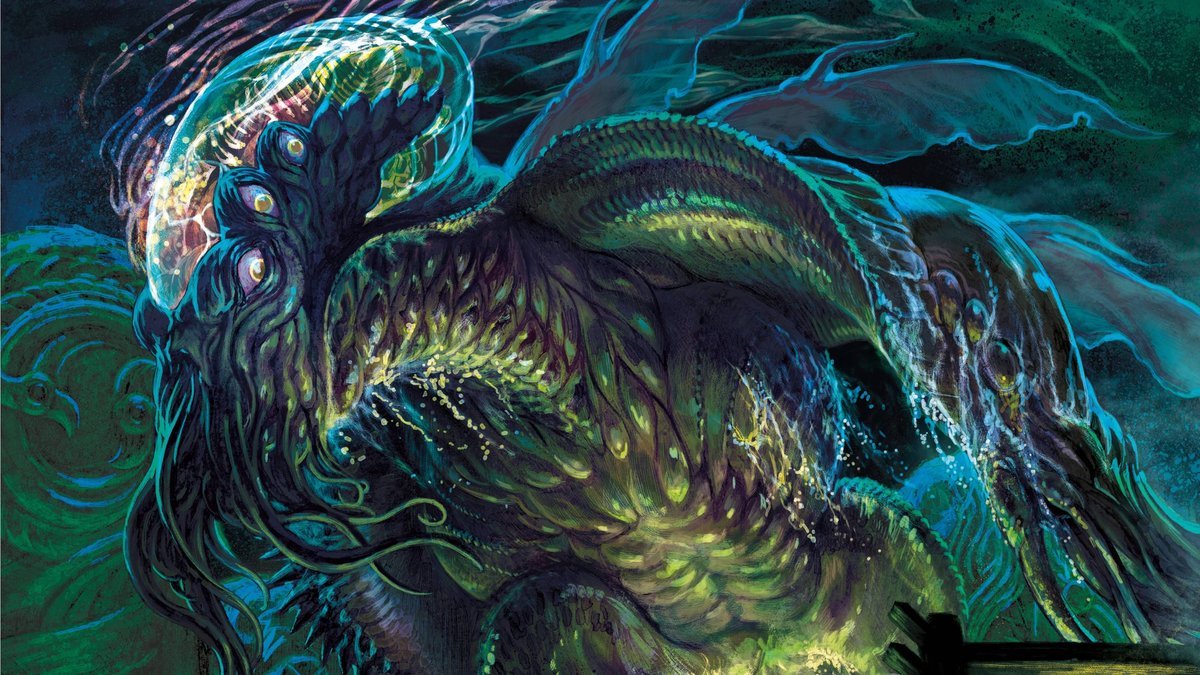
Chaosium, publisher of the tabletop role-playing game Call of Cthulhu, has officially renamed one of the Lovecraftian pantheon's most prominent deities in an upcoming board game. The entity formerly known as Shub-Niggurath will be called Shub-Gorath in Call of Cthulhu: Old Ones, a new tabletop game for two to four players that lets participants take on the roles of Great Old Ones and their factions.
The decision emerged as Chaosium launched a Gamefound crowdfunding campaign for the title, which features several deities from the Cthulhu Mythos including Cthulhu, Hastur, Yog-Sothoth, and the renamed entity. In an update posted to the campaign page, Chaosium explained the reasoning behind the change, noting that the original name could be associated with a racial slur used to describe Black people.
Why the Name Had to Change
Chaosium acknowledged that Lovecraft scholars agree the name Shub-Niggurath was not intentionally derived from the slur. However, the company pointed out that the original name could trigger automatic content filters online—a phenomenon known as the Scunthorpe problem, named after an English town whose residents were unable to create AOL accounts in 1996 because the town's name contained a slur within it. Beyond technical filtering concerns, Chaosium emphasized that the name could prove hurtful to audiences, particularly when considered alongside H.P. Lovecraft's own documented views. The writer held deeply racist and xenophobic beliefs throughout his lifetime, as reflected in his private correspondence and some of his published fiction.
The company framed the change not merely as a content moderation measure but as a recognition of the original author's troubling legacy. Chaosium stated that transparency was essential in making this decision, acknowledging upfront that no single approach would satisfy all players.
In-Universe Justification
Chaosium also provided a narrative justification for the rename that fits within the game's fictional setting. Call of Cthulhu: Old Ones takes place in an age predating humanity, when the Great Old Ones had not yet been assigned proper names by the civilizations that would eventually rise and worship them. This temporal framing allows the name change to feel organic to the game's world rather than imposed from outside.
The new name, Shub-Gorath, draws from Shuma-Gorath, another Great Old One created by Robert E. Howard, the author of Conan the Barbarian. Howard introduced Shuma-Gorath in a short story titled "The Curse of the Golden Skull." The entity was later developed more fully by Marvel Comics, which featured it as a villain opposing Doctor Strange. By borrowing from Howard's creation, Chaosium positioned the rename as a continuation of collaborative storytelling traditions rather than an erasure of Lovecraft's work.
The Collaborative Mythos Tradition
Chaosium's explanation emphasized that the Cthulhu Mythos has always operated as a shared creative space. Lovecraft and his contemporaries, including Howard and Clark Ashton Smith, actively encouraged one another to develop stories using the same monsters and deities, creating an early form of collaborative fiction. This tradition of borrowing, adapting, and recombining elements from one another's work established a precedent for exactly the kind of change Chaosium has now made.
The timing of the decision also reflects broader changes in how Lovecraft's work is legally treated. His original stories entered the public domain outside the United States in 2007 and in the U.S. in 2024. Chaosium framed the name change as consistent with how Lovecraft, Howard, and other writers originally built their interconnected worlds: through the exchange of ideas, adaptation of names, and combination of elements from different sources.
Shub-Niggurath itself appeared relatively sparsely in Lovecraft's original writings. The entity was primarily referenced through invocations and epithets such as "The Black Goat of the Woods with a Thousand Young" or "the All-Mother and wife of the Not-to-Be-Named-One," the latter possibly referring to Yog-Sothoth. This limited presence in the source material meant the rename did not require extensive rewrites of foundational lore.
Community Response
The announcement has generated mixed reactions within the Cthulhu fan community, a group long accustomed to grappling with Lovecraft's controversial legacy. Many players have responded with indifference, noting that the Great Old Ones are fundamentally unfathomable beings that should not be defined by their names alone. Some have pointed out that players retain the freedom to use whatever names they prefer at their own tables, making the official change largely a matter of presentation.
Other community members have expressed stronger disagreement. Sandy Petersen, the original creator of Call of Cthulhu, posted on X that while he frequently defends Chaosium online, he could not defend this particular decision. Chaosium anticipated this backlash, acknowledging that for some players, maintaining fidelity to Lovecraft's original names represents an important part of preserving the characters' legacy.
Despite the controversy, Call of Cthulhu: Old Ones achieved its funding goal in less than twenty minutes on Gamefound. The campaign has since accumulated close to $500,000 in backing, with the crowdfunding period scheduled to end on October 15.
Related Articles
About the Author