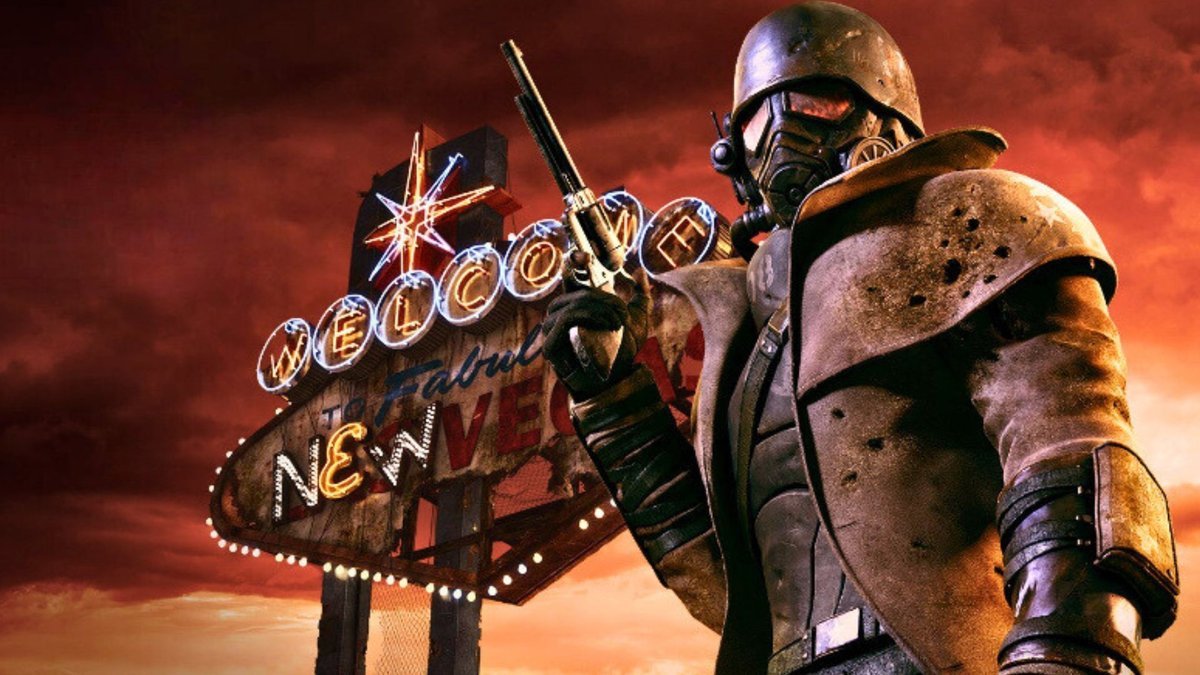
Fallout: New Vegas begins the same way every time: a man named Benny shoots your character in the head outside Goodsprings, leaving you for dead. What unfolds after that moment is entirely your choice. Obsidian Entertainment's open-world RPG, released in October 2010 and still playable on Steam and Xbox, gives players the freedom to define their Courier's identity and journey through the Mojave wasteland. You could become a hat-wearing cowboy, a corpse-eating vampire, a pacifist, or a pickpocket armed with live grenades. Beyond character creation, the real depth emerges when you impose your own rules on the experience. By locking in custom constraints and heading back into the wasteland, you can trigger entirely different skill checks, faction conflicts, and dialogue options that might otherwise remain hidden.
Surviving the Wasteland
Hardcore mode sits right there in the settings menu after character creation, offering players a chance to dramatically increase the game's difficulty. This optional mode transforms the basic survival mechanics into genuine threats. Every bullet, shell, and energy cell now carries weight in your inventory. Thirst becomes as dangerous as hunger, and sleep deprivation will kill you just as surely as any enemy. Healing items like RadAway and stimpaks no longer restore your health instantly; instead, they work gradually over time. Fast travel, normally a convenient way to cross the map, now comes with a real cost. Companions can die permanently, removing the safety net they normally provide. While debate exists over whether Hardcore mode truly raises the difficulty in meaningful ways, the mode offers flexibility: you can toggle it on and off at any time through the settings menu. Committing to Hardcore for an entire playthrough does unlock a unique achievement, rewarding players who embrace the challenge from start to finish.
For players seeking a different kind of constraint, playing dumb on purpose offers surprising rewards. During character creation, you have 40 points to distribute across your stats. Drop Intelligence to 1 and allocate those points elsewhere, and the game unlocks rare dialogue options that are genuinely funny. At REPCONN headquarters, a robot demanding a password will accept your seemingly random guess of "ICE CREAM!" — a response that normally requires a high Luck score to succeed. At the New Vegas Medical Clinic, asking "You sell plants, too?" during a conversation about implants earns a suggestion to purchase an implant that raises your Intelligence. The trade-off is real: low-intelligence characters earn only 10 or 11 skill points per level and start weaker in Medicine, Repair, and Survival. But discovering that the password really was ice cream makes the sacrifice worthwhile.
Faction Loyalty and Isolation
New Vegas contains four major factions competing for control: Mr. House's regime, the Free Economic Zone of New Vegas; Yes Man and Independent New Vegas; Caesar's Legion; and the New California Republic. A one-faction run demands you pick a side and commit entirely to its colors. Donning faction armor can work as a disguise, allowing you to operate temporarily within factions that would otherwise despise you — though some characters can see through the disguise. The reverse is equally true: wearing Legion armor in front of NCR soldiers could trigger an immediate firefight. Loyalty to one faction guarantees that every rival faction will treat you as an enemy. This opens you up to failed quests, occasional hit squads, and companions who refuse to travel with you. True believers, the challenge suggests, don't worry about the cost.
An outlaw run takes isolation further by making you an enemy of every faction simultaneously. Your Courier answers to no one and everyone is your opponent: the NCR, the Legion, the Westsiders, the Freesiders, the Boomers, the Powder Gangers, the Khans. This approach eliminates most of the game's conventional support systems. Factions normally provide quests, better prices on goods, and free equipment. Without those connections, you must rely entirely on stealing to acquire gear and resources. The outlaw run easily bleeds into a "kill everyone" playstyle, so players should accept that possibility upfront.
Specialized Combat Approaches
A cowboy run strips away modern armor and weapons in favor of Old West aesthetics. Starting in Goodsprings wearing a Vault 21 jumpsuit, you'll need to acquire a proper wardrobe: keep the armor off, wear a hat and the red-scarf Ranger outfit instead. The real power comes from the Cowboy perk, which requires level 8, 45 Guns, and 45 Melee. This perk adds 25 percent damage with revolvers, lever-action firearms, dynamite, knives, and hatchets — making those weapons your entire arsenal. Prepare for scarce ammunition and constant weapon repairs. For players uninterested in Western vibes, a vampire variant offers a different flavor: travel only at night, sleep through the day, and take the Cannibal perk to feed on human corpses while sneaking. Just never dine where anyone can see.
A sneak-and-explosives run completely reframes combat by forcing you to specialize in Sneak and Explosives before ranking anything else. One approach involves reverse-pickpocketing explosives into enemy pockets, stepping back, and letting the carnage unfold. Another path uses Charisma and Speech alongside traps to become a man in the shadows, talking your way through the Mojave while landmines handle the fighting. Either way, you'll need to avoid standing near the explosive when it detonates.
Extreme Challenges
A pacifist run eliminates the most fundamental part of the game: combat. After Benny shoots you in the head, you normally spend the entire game tracking him down through countless firefights. A pacifist run forbids all kills, all injuries to anyone, and all companions — since companions could do the killing for you. This approach demands heavy investment in Sneak and Speech, plus the Silent Running perk. The run involves constant sneaking and running, making it less an enjoyable gameplay experience than a punishing bragging-rights project. Your kill counter stays locked at zero, serving as your only trophy.

A beeline-to-Vegas run skips the entire scenic route through Primm, Nipton, Novac, and Boulder City. Normally, players encounter Powder Gangers, Legion scouts, and ghoul scientists along the way. Instead, you head straight for the Strip the moment you leave Doc Mitchell's house. The shorter route runs past cazadores and super mutants, but with strategic long-range attacks and careful sneaking, it's possible. Speedrunners have reached the Strip as early as level 2 and finished the main quest in approximately half an hour.
Economic Constraints
A gambler's run eliminates the normal way players earn caps — the Mojave's currency used to buy ammunition, stimpaks, repairs, and stat-raising implants. Most players earn caps by selling loot they find or steal. In a gambler's run, that reliable income source vanishes entirely. Instead, you must make your caps from casino games and Caravan, a card game played with a deck of at least 30 cards found or purchased throughout your adventures. Caravan requires building three caravans of cards to a value between 21 and 26, winning by selling two of the three. One bad streak of luck leaves you broke. If you prefer gambling over strategy, the Strip offers blackjack, roulette, and slots. Investing at least 7 points into Luck during character creation improves your odds considerably. Those seeking an advantage can stack their Caravan deck with 10s, 7s, 9s, and face cards, though that approach bends the spirit of the challenge.
Related Articles
About the Author