Component shortages and inflated hardware prices have fundamentally shifted the budget gaming PC landscape, making gaming laptops a viable option for the first time in years despite their well-known compromises.
Desktop PC builders face persistent cost pressures from expensive RAM, SSDs, and graphics cards, while handheld gaming devices have seen price increases exceeding 40 percent or now launch above £1,000. The entry point for a capable 1080p gaming desktop remains in the low thousands of pounds when factoring in a monitor and peripherals for new PC owners. Gaming laptops, by contrast, appear to be weathering these pricing pressures more effectively than their desktop equivalents.
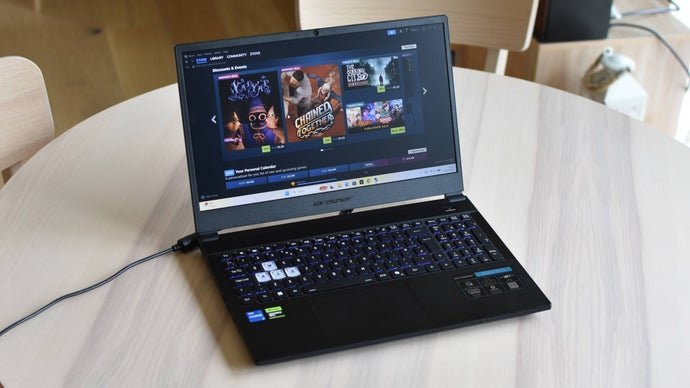
A Medion Erazer Scout 15 equipped with an Nvidia RTX 5050 GPU costs £850, or £798 from some retailers. Building an equivalent desktop system with the same graphics card, monitor, Windows license, and basic CPU, memory, and storage configuration would cost approximately £1,100. The laptop's 16GB of RAM and 1TB SSD represent reasonable specifications for the price, avoiding the sluggishness of cheaper hard drives.
The RTX 5050 laptop performs in a similar performance tier to Valve's Steam Machine, delivering high-quality settings in demanding games. In Cyberpunk 2077 with ray-traced reflections, the Scout 15 averaged 50 frames per second using DLSS 4.5 upscaling, compared to 37 fps on a Steam Machine running equivalent settings with FSR. The laptop also includes access to DLSS technology and Multi-Frame Generation features.
Compromises remain
The Scout 15 exhibits typical gaming laptop weaknesses. Its Intel Core i5-13420H processor is three years old and was not cutting-edge when released. Battery life under gaming loads drops to around an hour or less, and fan noise easily overwhelms the tinny built-in speakers, necessitating a headset purchase. The 144Hz IPS display offers adequate specifications with a 1,574:1 contrast ratio, though it covers only 62.7 percent of the sRGB color gamut and peaks at 330 candelas per square meter brightness.
Despite these limitations, the Scout 15 presents a mature design compared to the heavily RGB-laden gaming laptops of previous years. Its slim profile and selection of ports make it reasonably portable for a budget machine. Similar alternatives like the Acer Nitro V15 offer comparable value propositions.
For newcomers to PC gaming, gaming laptops now represent the closest available approximation to an affordable entry point in an environment where genuine bargains have largely disappeared across all gaming hardware categories.
Related Articles
About the Author