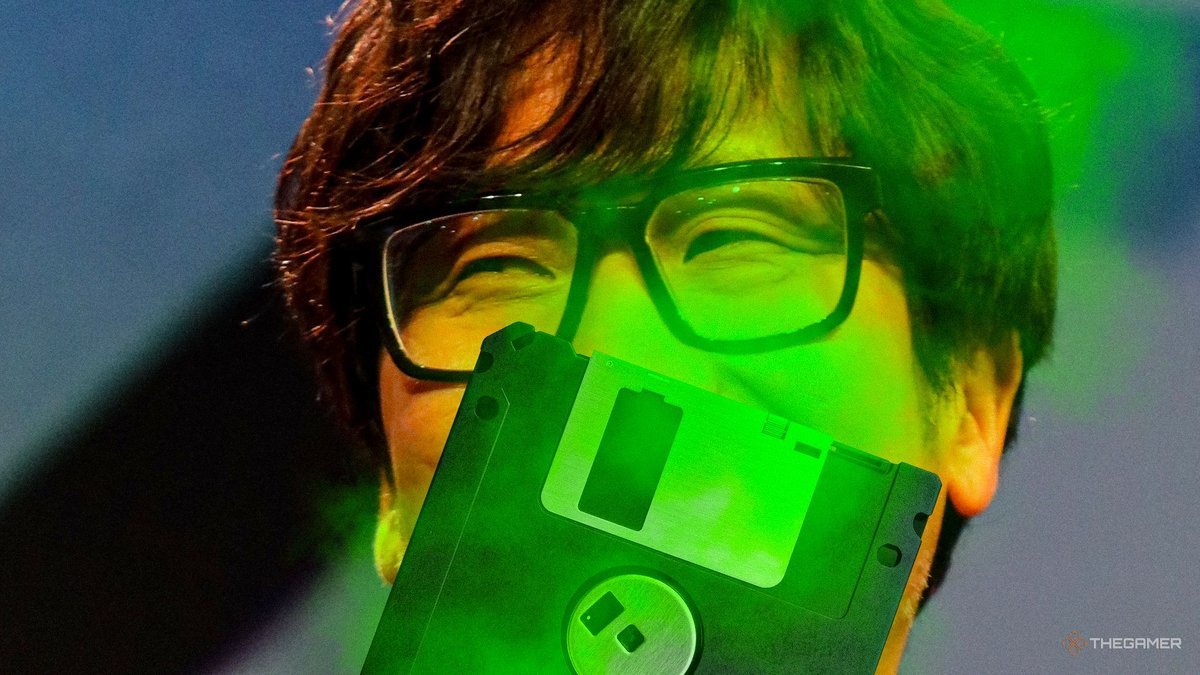
Hideo Kojima has long been known for pushing creative boundaries, but one of his most unusual proposals came during development of the cyberpunk graphic adventure Snatcher in the 1980s. The legendary designer wanted to coat the game's floppy disks with a paint that smelled like blood. His concept was that as a player's computer warmed up during gameplay, the paint would melt and fill the bedroom with an odor mimicking a murder scene. Konami's executives rejected the idea outright, shelving what Kojima called his "Smell Project" permanently.
Why the idea never worked
The proposal presented multiple practical problems that made it unworkable at the time. Melting paint inside a disk drive risked hardware damage and posed serious health hazards from chemical fumes released into an enclosed space. Additionally, the effect would be destructive and one-time only—once the paint melted, the novelty would be exhausted. These concerns, combined with the obvious liability issues, meant the concept remained firmly in the realm of fantasy for nearly four decades.
New scent technology emerges
Recent advances in digital scent technology suggest Kojima's vision may no longer be impossible. Researchers have developed a system called Scentronic that uses an "e-nose" to recognize and transmit scents remotely. The technology works by identifying smell molecules and sending matching scents through a receiving device, effectively adding olfaction to digital communication alongside audio and video. Chunyu Yang, a doctoral student at Ohio State University, explained that the goal is to make remote experiences more engaging by incorporating smell alongside the visual and audio information already shared digitally.
Current limitations and future potential
The technology currently recognizes only five distinct scents, though researchers believe a broader scent library is theoretically possible with additional training of the e-nose system. The intended applications focus on practical consumer uses: allowing customers to sample perfumes, soaps, and candles during online shopping, or enabling people to share the aroma of a meal with distant family and friends. However, the gaming industry has already shown interest in scent integration. Sony has patented a smell-o-vision-style aroma technology specifically designed for video games and virtual reality experiences.
Gaming possibilities ahead
Given these developments and Sony's existing patents, it remains plausible that someone like Kojima could revisit his blood-scented disk concept using modern scent-emission hardware. Rather than melting paint, contemporary technology could deliver olfactory effects through external devices, creating genuinely immersive horror experiences. The prospect raises both exciting and unsettling possibilities for how games might engage players' senses in the future.
Related Articles
About the Author