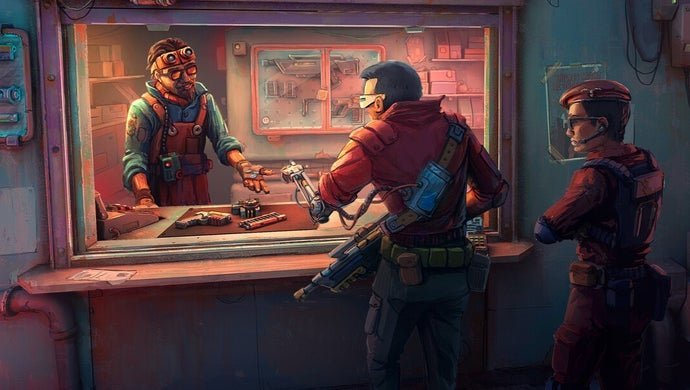
The cyberpunk shopkeeper simulator Probably Stolen has become a breakout success on Steam, drawing over 162,000 concurrent players in its first days. Yet the game's journey to prominence began in obscurity, under an entirely different name and aesthetic that seemed destined for commercial failure.
The title started as Deepspace Emporium, a non-cyberpunk trading sim that attracted minimal attention. A demo of the original concept peaked at just 28 concurrent players, suggesting the project would fade into obscurity. Publisher tinyBuild, however, saw potential in the core gameplay and partnered with developer Questing Goose to fundamentally reimagine the game's visual direction and expand its systems. The gamble proved successful, transforming the forgotten title into a chart-topper.
From Obscurity to Success
tinyBuild CEO Alex Nichiporchik described the transformation on social media, explaining that the studio loved the original concept and mechanics but recognized the need for a visual reinvention. The team focused on what worked in the design and rebuilt the presentation around those strengths. The result was Probably Stolen, which retained the core gameplay while adopting a cyberpunk aesthetic and expanded feature set.
The original Deepspace Emporium and its successor share fundamental similarities in their core loop. Both games centre on haggling with various characters, buying and selling goods of different quality and legality while navigating a fluctuating market and managing financial obligations. The experience draws comparison to Papers, Please, except the player examines contraband rather than travel documents, deciding whether to stock illegal weapons or other black market goods. Faction management adds another layer, requiring players to balance the interests of station security, underworld barons, and other competing groups.
Expanded Gameplay and Presentation
Probably Stolen takes the foundation established by Deepspace Emporium and amplifies its cyberpunk elements with enhanced visuals and additional depth. The pixel art aesthetic, while not universally striking, carries pleasing texture and detail. The game's inventory system forms a substantial part of its appeal, offering a vast catalogue of items players can stock and sell. Vocational pathways such as gunsmith and chemist allow for different playstyles, while the variety of goods—from rat corpses to robotic hands to purple tubers of uncertain origin—creates a rich trading environment.
The visual transformation from Deepspace Emporium to Probably Stolen reflects a broader pattern in game development. Team Fortress 2 underwent a dramatic shift from its early prototype appearance, which resembled a Silent Hill environment populated by toy soldiers, to its distinctive colourful aesthetic. Borderlands similarly evolved from a hungover Fallout 3 look into its signature style through strategic art direction changes. Gearbox's work on that title demonstrated how visual cohesion and colour palette choices could elevate a game's appeal and commercial viability.
The Value of Visual Reinvention
The prevailing assumption in the industry holds that injecting colour, personality, and visual clarity into a game can propel it toward success. Yet the relationship between aesthetics and commercial performance remains complex. It remains uncertain whether Team Fortress 2 or Borderlands might have achieved comparable success had they retained their original visual directions, or whether the transformation was merely one factor among many that contributed to their prominence.
Probably Stolen's ascent from a 28-player demo to a six-figure concurrent player count demonstrates the potential impact of thoughtful visual redesign paired with solid core mechanics. Whether the game's success stems primarily from its aesthetic overhaul or from the combination of improved presentation and expanded systems remains an open question.
Related Articles
About the Author