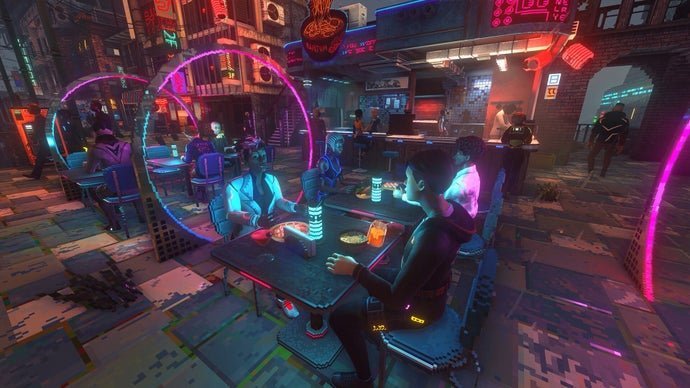
Nivalis Nights contains no combat, boss fights, or player death, yet its lead writer Thomas Welsh insists the game is not a cosy experience. Instead, the title deliberately embraces the tension and overwhelm inherent to cyberpunk fiction, forcing players to work if they want to find any peace within its world.
Welsh explained that the opening deliberately immerses players in chaos. Life in a cyberpunk setting should feel stressful and demanding, he argued, not inherently relaxing. The game imagines a world where every app sends urgent notifications, creating constant pressure. Players who want to achieve comfort must actively push back against this noise—they can "swim upstream," as Welsh put it, and potentially end up wealthy enough to live on a farm. The path to success varies for each person, and it is entirely possible to complete the story while being poor at business.
Earning Comfort Through Effort
This design philosophy reflects a core principle of the cyberpunk genre itself. Cyberpunk fiction thrives on exaggeration and social critique, taking real anxieties about technology and amplifying them to absurd scales—holograms, flying cars, and advertising so pervasive it makes the present day look quaint. Welsh's approach respects that foundation by refusing to hand players comfort on a silver platter. Instead, cosy moments must be discovered and earned through deliberate play, making them feel genuine rather than automatic.
The game's approach extends to its romantic mechanics, which Welsh described as intentionally messy. The team wanted players to experience confusion and uncertainty when relationships fail to develop. Rather than following a transparent logic where kindness automatically unlocks romance, the dating system mirrors real life—players never quite understand why a connection didn't form. This design deliberately avoids the transactional feeling of many games, where performing the "correct" actions guarantees specific rewards.
A World of Varied Outcomes
Welsh's comments suggest Nivalis Nights has been built with considerable thought about how systems reinforce its themes. By making success subjective and romance unpredictable, the game resists the mechanical clarity that dominates much of the industry. Players cannot simply follow a checklist to achieve their desired outcome; they must navigate ambiguity and accept that different paths lead to different versions of success.
The cyberpunk setting provides the perfect backdrop for this philosophy. A world drowning in notifications and competing demands naturally creates friction. Rather than smoothing away that tension, Nivalis Nights leans into it, making the player's struggle to find peace feel earned and meaningful. Those who do discover moments of calm will have genuinely worked for them.
Related Articles
About the Author