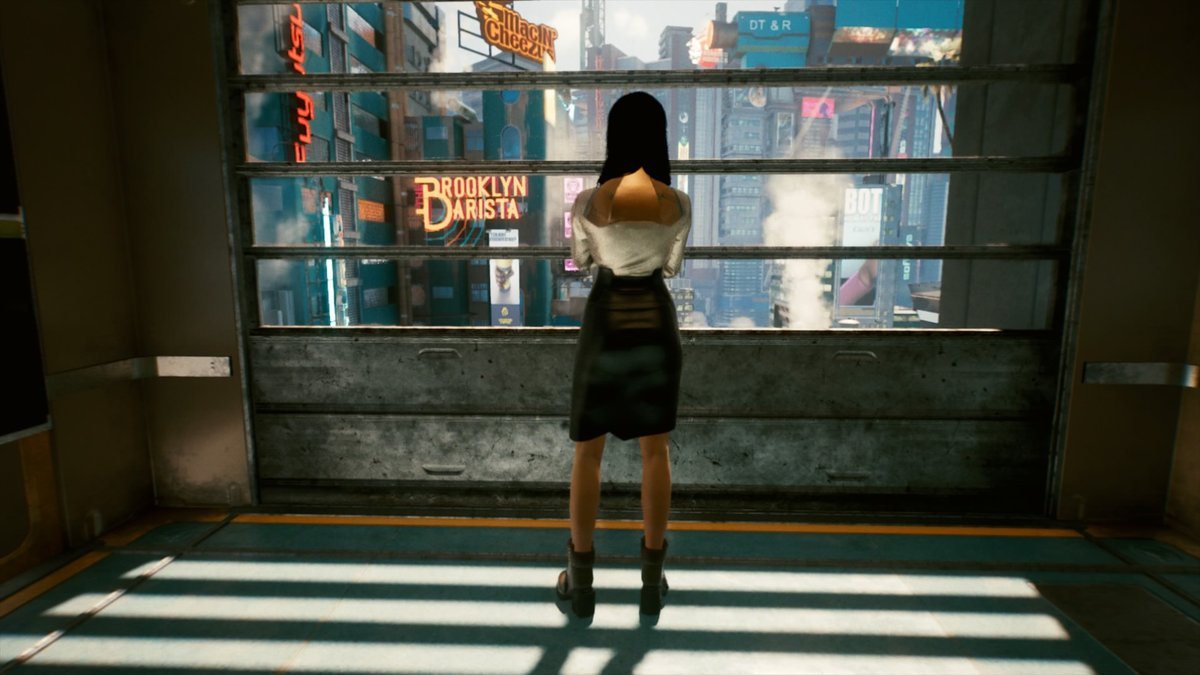
Cyberpunk 2077 leaves a mark. The neon-drenched streets of Night City, the pervasive sense of corporate decay, and V's existential crisis create a dystopia that lingers long after you've finished playing. If you're craving that same feeling of immersion in a broken future, several other titles offer comparable experiences—some closer to the original than others, but all populated by flawed systems, morally compromised characters, and reasons to keep playing.
Espionage and Augmentation
Deus Ex: Mankind Divided transports players to 2029, where protagonist Adam Jensen finds himself caught in a web of corporate conspiracies and augmentation ethics. The game begins with Jensen attempting to stop rogue arms dealers from selling weapons and augmentations, a mission that quickly spirals into chaos when masked mercenaries crash the deal. What follows is a labyrinth of competing factions—the Illuminati, underground hacker collectives, and terrorist groups all vying for control.
Set primarily in Prague, the game forces you to navigate subway stations and infiltrate corporate offices while determining which conspiracy actually matters. Jensen's journey begins in an abandoned Dubai resort during a sandstorm and escalates as he uncovers a plot by augmented terrorists to keep humanity divided and afraid. The core question mirrors Cyberpunk 2077's identity crisis: what remains of a person when their body is replaced piece by piece? Deus Ex: Mankind Divided is available on PC, PlayStation 4, and Xbox One.
Watch Dogs: Legion takes the hacking and paranoia of Cyberpunk 2077 but strips away the RPG elements. The game opens with a mysterious group called Zero Day framing the hacker collective DedSec for bombings across London. With the city locked down under authoritarian surveillance and DedSec branded as public enemy number one, the resistance must rebuild from scratch by recruiting ordinary citizens.
Unlike Cyberpunk 2077's V, a character with a defined role in the narrative, Watch Dogs: Legion lets you become anyone. You can recruit random citizens from the street and send them into combat with an invisible spy car, creating a dynamic that feels fundamentally different from traditional open-world RPGs. The game emphasizes hacking, stealth, and gunplay across PC, PlayStation 4 and 5, Xbox One, and Xbox Series X.
Fantasy and Corporate Collapse
The Witcher 3: Wild Hunt shares the same developer as Cyberpunk 2077—CD Projekt Red—and carries forward the studio's philosophy that good choices are negotiable. The game follows Geralt of Rivia, a mutant monster hunter searching for his daughter Ciri, who possesses powers coveted by the Wild Hunt, a ghostly army. Yennefer, Geralt's ex and a powerful sorceress, joins the quest.
While The Witcher 3 trades neon for medieval fantasy and motorcycles for horses, both games feature morally complex narratives where every decision carries consequences and no path feels entirely righteous. The recent remaster makes this an ideal time to experience how CD Projekt Red approaches storytelling across different genres. The game is available on PC, PlayStation 4 and 5, Nintendo Switch, Xbox One, and Xbox Series X.
The Ascent presents a more focused vision of corporate dystopia. You begin as an indentured worker for the Ascent Group, a mega-corporation that operates a city-sized tower on the planet Veles. Stuck performing maintenance in the tower's lowest level—a place called the deepStink—your future seems predetermined until the Ascent Group suddenly goes bankrupt and the tower shuts down overnight. The mystery of why unfolds as you navigate the resulting corporate anarchy.
While The Ascent uses a top-down isometric perspective rather than Cyberpunk 2077's first-person view, it delivers the same aesthetic commentary on corporate monopolies and futuristic urban decay. Walking into a neon-lit neighborhood means encountering hundreds of hostile forces, creating satisfying combat encounters within a tighter scope than Cyberpunk 2077's massive open world. The Ascent runs on PC, PlayStation 4 and 5, Xbox One, and Xbox Series X.
Delivery Routes and Urban Legends
Cloudpunk offers a radically different take on dystopian cities. As a courier for an illicit delivery service, you play as Rania, following two simple rules: never miss a delivery and never open the package. On your first night, increasingly shady assignments reveal how precarious your city's infrastructure truly is.
There is no combat in Cloudpunk—you are fundamentally a delivery driver navigating a dark, vertical sci-fi city. Yet both Cloudpunk and Cyberpunk 2077 explore whether technology genuinely improves life when those controlling it have no interest in ordinary people's welfare. The game features the same bright holograms and high-tech corruption, but from ground level rather than as a corporate operative. Cloudpunk is playable on PC, PlayStation 4 and 5, Nintendo Switch, Xbox One, and Xbox Series X.
Ghostwire: Tokyo takes the broken city setting into supernatural territory. Protagonist Akito survives a fatal motorcycle crash only because a displaced spectral detective named KK possesses him. When an occultist triggers a deadly fog that transforms people into piles of clothes and loose spirits, Akito and KK team up to uncover what happened and save Akito's sister Mari from becoming fuel for the occultist's plans.
Ghostwire: Tokyo shares Cyberpunk 2077's dense, futuristic environments and reliance on advanced technology in combat, but replaces corporate intrigue with urban legends come to life. The game adds stealth ninja abilities to the mix, creating a different tactical experience. It is available on PC, PlayStation 5, and Xbox Series X.
Neural Hacking and Bartending
Observer presents a first-person psychological horror experience centered on neural detective Daniel Lazarski, who receives a distress call from his estranged son. Tracing the call to an apartment building, Daniel finds himself trapped inside as the building goes into lockdown. To find his son and investigate a murder, he must jack into the minds of residents—living and dead—and experience their memories as surreal, horrifying hallucinations.

The world of Observer has been devastated by a digital plague called the nanophage. Society operates under a strict class system, and a cybernetically augmented police force investigates constant violent crimes by hacking into minds. Like Cyberpunk 2077, Observer asks a fundamental question: how much of yourself can you replace before you stop being yourself? The game is available on PC, PlayStation 4 and 5, Nintendo Switch, Xbox One, and Xbox Series X.
VA-11 HALL-A takes the opposite approach, stripping away combat and open-world exploration entirely. You play as Jill Stingray, an empathetic but cynical bartender at a dive bar in Glitch City. Rather than becoming a legend or saving the world, you listen to the hopes and tragedies of regulars and strangers who sit at your bar. The setting is bleak—nanomachines control every aspect of human life—but the game focuses on intimate, personal struggles: unpaid bills, loneliness, heartbreak.
As a bartender simulator, you influence other characters' outcomes by determining what they actually want to drink and mixing it for them, sometimes even overriding their stated orders. This slice-of-life approach captures the visceral reality of how ordinary people experience a dystopian future. VA-11 HALL-A is available on PC, PlayStation 4, and Nintendo Switch.
None of these games will recreate Night City, but each offers a distinct dystopian world worth losing yourself in. Whether you prefer corporate conspiracies or occult ones, hacking into minds or pouring drinks, these titles share Cyberpunk 2077's fascination with how ordinary people navigate a future that has become very, very strange.
Related Articles
About the Author