Game designer and academic Jordan Magnuson recently organised a game jam centred on the concept of "game poems"—works that blend videogame design with poetic practice. The event, co-organised by the UK's National Film and Television School and judged by figures including former PlayStation Indies boss Shuhei Yoshida, ran on 7-8 September and drew around 90 submissions in 24 hours around the loose theme "the other one".
Magnuson's framework for game poems, outlined in his open-access book Game Poems: Videogame Design as Lyric Practice, describes them as short, subjective works that employ poetic address, exist in ritual spaces, and blur the line between metaphorical and material meaning. Rather than transmitting narrative or content, game poems offer what Magnuson calls a "ritual space" and "forum" for ambiguous participation in an event or feeling. The category draws on family resemblance rather than rigid boundaries, encompassing works that make use of hyperbole, metaphor, and poetic devices adapted to interactive form.
One standout submission, Sometimes I Wonder About The Other Me by developer Luis Díaz Peralta, demonstrates this approach through a deceptively simple structure. The 2D platformer presents single-screen maps, each containing a text fragment that builds into a larger monologue. At a signpost, players can choose left or right, leading to a split-screen sequence where two duplicate characters move together. As they progress, one half of the screen dissolves into darkness, leaving one character to return and begin again. The work captures the cyclical, speculative nature of "what if" scenarios in a way that traditional branching narratives often fail to achieve, haunting players with alternatives that are constantly overwritten rather than fully realised.
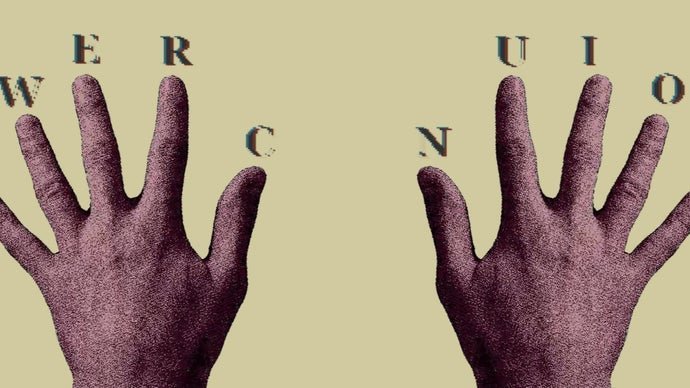
Other jam entries displayed similarly inventive antagonism between game and poetic form. The Other Line by Sunfarer sees players controlling a block caught between two queues, each advancing only when the player is absent from it—a mechanic that mirrors the frustration of reading and the left-to-right movement of both scrolling games and English verse. Faulty Mirror by Chris Barrett tasks players with matching their keyboard-controlled hands to a reflection that never quite stays still, accompanied by an ascending Shepard's tone that creates auditory vertigo. The piece pairs this with slant-rhyming verse that mirrors the game's own uncertainty about which side of the reflection is real.
Still Life, presented as a "stress toy/stim gadget/poem" by tabletop publisher Misery Tourism, builds faces from Conway's Game of Life cellular automata. Players sculpt evolving heads by manipulating patterns across two grids labelled life and death, watching features bloom and wither as the generation cycle accelerates. The heads never break eye contact, and the piece culminates in a sunrise that merges both grids into a single calcified form.
Magnuson's own earlier work Portraits of My Child, created before the jam, explores similar territory by atomising his relationship with his newborn son into minigames like "first breath" and "first smile." Rather than celebrating parental joy, the piece presents parent and child as mutually alarmed and cybernetic—the parent's face rendered as a shifting constellation of rectangles during peekaboo, suggesting the filial bond begins as mere pareidolia. Magnuson describes the work as a "triangulated address" between player, creator, and evocations of his son, deliberately evoking questions about how the self relates to the other.
These submissions suggest that game poems function as creatures caught between two forms, regarding themselves suspiciously and trying to match their own step. Rather than resolving the tension between videogame and poetic practice, they amplify it, using that friction to question assumptions about narrative, representation, and what it means to interact with meaning itself.
Related Articles
About the Author