Saber Interactive is driving its recent business expansion by resurrecting classic gaming intellectual properties while maintaining strict profitability targets for new projects.
According to Chief Creative Officer Tim Willits, the publisher does not greenlight any project unless internal projections indicate it can generate four times its original cost. Speaking on the studio's financial approach, Willits highlighted lower-budget successes such as the 2020 off-road simulation SnowRunner, which cost approximately $6 million to create and subsequently earned hundreds of millions of dollars. Similarly, the cooperative shooter World War Z reached 32 million players with a relatively small development team, providing consistent long-term revenue through expanding downloadable content.
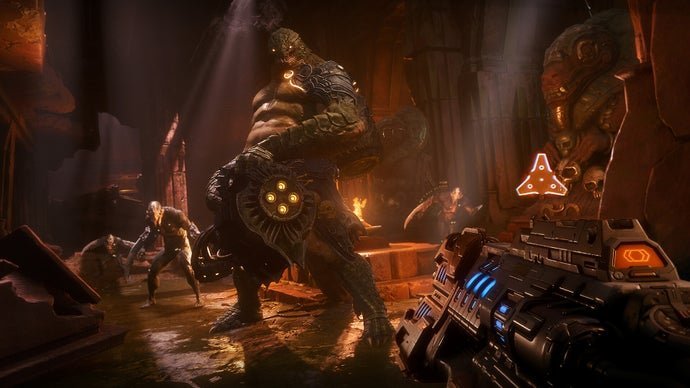
This disciplined strategy allows Saber to fund major releases like the hit Warhammer 40,000: Space Marine 2 by maintaining smaller, highly predictable titles alongside them. The company's current development pipeline features a diverse mix of newly licensed properties and classic revivals. Projects underway include a third-person John Wick action game, a new Stuntman title acquired from Embracer Group, Turok Origins, Clive Barker's Hellraiser: Revival, and a remake of Star Wars: Knights of the Old Republic, alongside Space Marine 3.
Willits, an industry veteran who spent 23 years at id Software designing games like Hexen and Strife, believes major industry platform holders are overlooking vast archives of dormant intellectual property. He noted that publishing and development rights issues historically kept series like Heretic and Hexen dormant, though many of those properties now reside under Microsoft. Willits suggested large companies could benefit by assigning small teams of around 20 developers to update forgotten games, pointing to legacy brands like Pitfall and MechWarrior as prime opportunities.
During Gamescom, Willits also addressed recent debate regarding generative artificial intelligence in game development, specifically referencing Saber's upcoming title Rideshare Simulator. Clarifying that the publisher does not have a studio-wide AI mandate, he described the current usage as an experiment, while predicting that public skepticism toward the technology will shift once a studio delivers what he called the "Half-Life 2 of AI."
About the Author