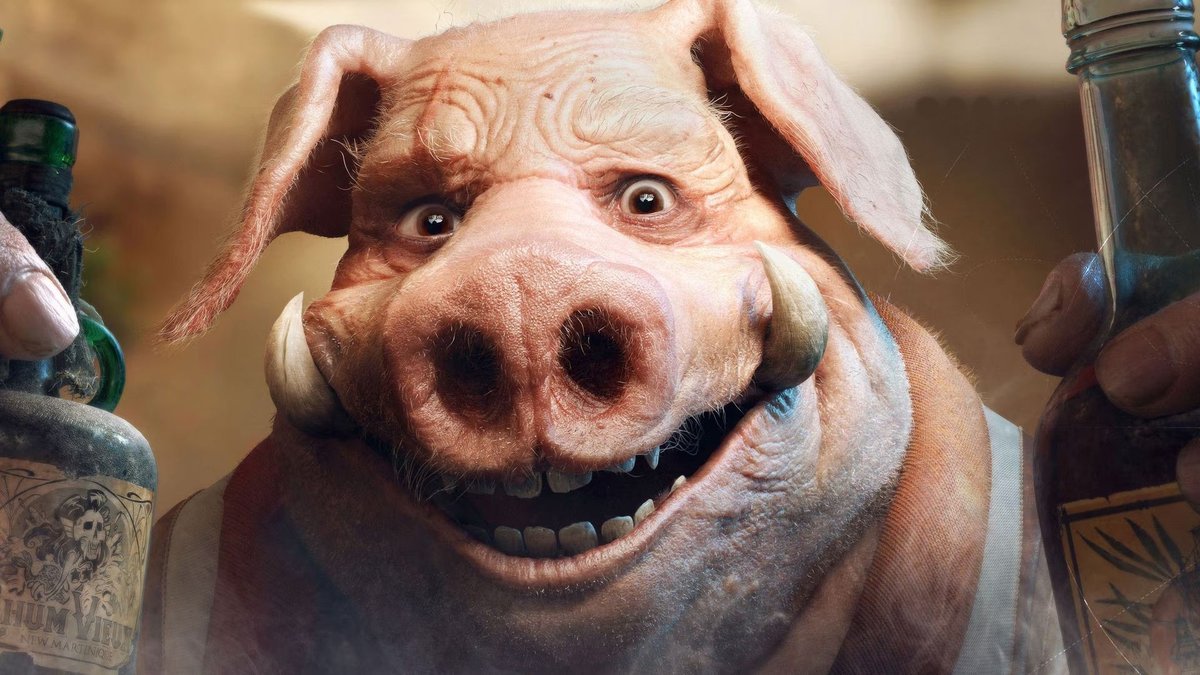
Beyond Good and Evil 2 has experienced one of the most turbulent development journeys in modern gaming, according to a recent report. The sequel, originally announced in 2008, now holds the record for the longest development cycle of any AAA title. Despite confirmation from Ubisoft in January that work continues, the game remains years away from completion, with no public release date in sight.
The project has shed key talent over its extended timeline. Michel Ancel, the original series director, departed the team, as did Emile Morel, who served as the sequel's second director. Several hundred people currently work on the game, primarily at Ubisoft Montpellier, yet progress has remained slow and uncertain. Even some developers are reportedly unsure whether the game will ever reach players.
Dramatic Shifts in Design Direction

Between 2019 and 2022, the development team pursued a fundamentally different vision for the sequel. The game was conceived as a massive multiplayer experience where players would travel across multiple planets and encounter dynamically generated quests. Fortnite and Destiny served as primary inspirations during this period, shaping the team's ambitions for a large-scale online world.
That vision underwent radical compression over time. The multiplayer structure was first condensed into smaller matchmaking groups, then reduced to four-player teams, and eventually scaled down further to just two players. Today, Beyond Good and Evil 2 is being reimagined as a "solo first" adventure that prioritizes story and single-player progression, though cooperative play will still be included. Notably, the game no longer requires an online connection to play.
Perpetually Shifting Milestones
The project has repeatedly missed internal development targets, but not due to developer incompetence. Instead, the goals themselves have continuously changed direction. Past milestones have questioned whether the core gameplay loop feels engaging, whether the mechanics are sufficiently innovative, or whether the overall experience is "cool" enough to justify continued investment.
These moving targets have kept the game locked in pre-production status. The next milestone aims to advance the project into an Alpha phase, where playable elements can finally begin implementation. This represents a significant hurdle; until the team reaches Alpha, substantial portions of the game remain theoretical rather than functional.
Uncertain Future Despite Executive Support
Ubisoft's leadership has consistently protected Beyond Good and Evil 2 from cancellation, maintaining faith in the project despite its troubled history. However, that safety net may not hold indefinitely. As Ubisoft undergoes corporate restructuring, the company's priorities and budget allocations are shifting, potentially threatening the sequel's continued existence.
Interestingly, opinions within the development team are divided about the project's future. Some newer employees worry that Beyond Good and Evil 2 will be canceled at the next milestone review. Conversely, several long-serving team members are reportedly hoping for cancellation, viewing it as an opportunity to transition to projects with clearer creative direction and defined completion timelines. This internal ambivalence underscores the frustration that years of uncertainty and constant redesigns have created.
The original Beyond Good and Evil launched in 2003 to critical acclaim, establishing a devoted fanbase that has waited two decades for a sequel. The franchise's legacy and Ubisoft's commitment to the IP have kept the project alive through multiple false starts and conceptual overhauls. Whether the company will ultimately see the project through to release, or whether internal doubts and corporate pressures will finally result in cancellation, remains one of gaming's most enduring questions.
Related Articles
About the Author