Krafton has unveiled PUBG Ded.Net, a new take on the battle royale formula that combines roguelite progression mechanics with a grungy, hyperviolent gameshow aesthetic. The game is being developed by PUBG Madison, Krafton's Wisconsin-based studio, and represents an attempt to evolve the franchise beyond the original's established formula while capturing what made it influential in the first place.
Player Unknown's Battlegrounds fundamentally shaped the battle royale genre as it exists today. Though Fortnite eventually claimed the genre's mainstream crown, PUBG's legacy remains significant—the game introduced millions of players to the concept of dropping into a shrinking play area to fight for survival. When Krafton announced a new PUBG was in development, it presented both an exciting prospect and a considerable challenge for the team tasked with following up on such an important title.
Creative director Dave Curd explained the thinking behind Ded.Net at Gamescom. He described being tasked with introducing PUBG to audiences who might not already appreciate or understand the franchise. To accomplish this, the team broke down the series to its core appeal: not specific mechanics like the blue zone or level three helmets, but rather the fundamental theme of desperate survival and competition.
A Roguelite Battle Royale
Ded.Net maintains the foundational structure of a third-person battle royale shooter. Players are dropped into a map where an ever-shrinking circle forces combat over resources, with victory going to the last survivor. The twist comes in how the game treats your character—you are a contestant in an exaggerated, ultra-violent gameshow that channels the pulpy action media of the 1990s.
The game's signature innovation draws from pick-three roguelites, a popular roguelite style where players select upgrades from three available options. In Ded.Net, these mechanics play out across multiple consecutive matches. After finishing a game, the power-ups and character-altering abilities you selected can carry forward, affecting subsequent matches in both positive and negative ways.
For example, if you equip giant blade arms by severing your limbs in one match, the next game might offer you additional melee-focused power-ups. However, you could also receive injuries that create new challenges—you might fail to reload occasionally or find swimming more difficult. As you push into increasingly challenging matches, you earn greater rewards, but the mounting risks mean cashing out and starting fresh becomes a viable strategy.
Curd sees this mechanic as addressing a persistent frustration in battle royales. Players often quit after a few losses, feeling demoralized by repeated defeats. In Ded.Net, even after a crushing loss, an exciting new ability might appear as a reward option, tempting you to play another match. This approach transforms the loss into a setup for the next fantasy rather than a purely negative experience.
The creative director emphasized that this design philosophy levels the playing field for newcomers. When starting PUBG today, new players face opponents with thousands of hours of experience. Ded.Net intentionally bakes unfairness into its design, making wins and losses feel less crushing because everyone is operating under the same chaotic conditions.
Capturing PUBG's Best Moments
Ded.Net is not simply an attempt to fix PUBG's perceived weaknesses. Curd stressed that the goal includes capturing the franchise's greatest strength: the ability to organically create memorable moments where gameplay elements coalesce into thrilling climaxes. Winning a match when you are a collection of upgrades and injuries creates a different kind of satisfaction than a clean victory.
Curd was adamant that Ded.Net would not become a number-crunching simulator like many roguelites. He rejected the idea of incremental upgrades that add five points to firing speed or stamina recharge. The team deliberately avoids mechanics that require players to perform calculations or track complex stacking systems. Instead, all power-ups are designed as strategic gameplay opportunities that create meaningful tactical choices without overwhelming players with minutiae.
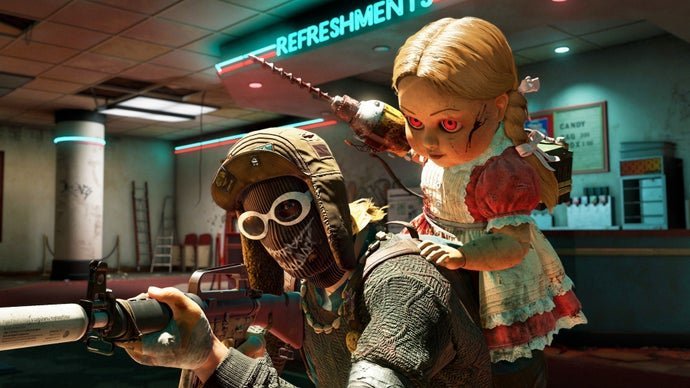
The powers themselves are deliberately outlandish for a game bearing the PUBG name. Players can equip giant sword arms by slamming their limbs into a malfunctioning pinball machine, but doing so prevents them from firing guns for the remainder of the match. Another option transforms you into a porcelain, Chucky-like living doll that can jump onto allies' backs for a ride or onto enemies to steal their items. The doll even giggles occasionally to warn its host that something creepy is crawling across them.
Curd explained that the team invested significant effort ensuring these wacky elements feel meaningful rather than gimmicky. Multiple players can be dolls in the same match thanks to multiple attachment points on player bodies. When an ally doll and enemy doll are both attached to the same player simultaneously, the game includes a dedicated doll-versus-doll combat system to resolve the conflict.
Entertainment Over Simulation
The underlying philosophy driving these design choices centers on entertainment value. Curd stated that the development team's core question for every potential feature is whether it makes them laugh, presents an intriguing fantasy, and stays in their minds after the workday ends. If the answer to all three questions is yes, the team typically pursues it.
This approach extends beyond character abilities. Ded.Net includes a dedicated seatbelt system for vehicles—drive without fastening your seatbelt and you will be ejected through the window during a crash. Certain objects can be hacked to cause chaos, such as trucks that explode after a set duration. While the running-man-style murdershow concept is not entirely new to gaming, it represents a refreshing departure in a genre dominated by military simulations and family-friendly aesthetics.
When asked whether he believes battle royales are becoming stale, Curd acknowledged that the genre has matured. The major players have found their niches, but he views this as an opportunity rather than a limitation. He argued that evolution is necessary—stagnation leads to decline, and he wants to keep pushing the genre forward.
Managing Expectations and Pressure
Given the prestige of the PUBG brand, the development team faces considerable pressure. Curd framed this pressure as a privilege, expressing gratitude for being trusted with such an important intellectual property. He acknowledged that fixating on the weight of expectation could lead to second-guessing and creative paralysis.
He credited his executive producer with providing crucial support, emphasizing that leadership has prioritized pleasing fans and creating something memorable over hitting specific commercial targets. The studio's philosophy centers on lean team innovation rather than assembling a massive organization where failure carries catastrophic consequences.
Curd described the development process as thoughtful and incremental, built collaboratively with fans. The team believes they are constructing something players will genuinely love, approaching the project with the confidence that comes from having institutional support for creative risk-taking.
Related Articles
About the Author